What began as a side project is now winning enterprise clients from legacy corporate giving platforms.
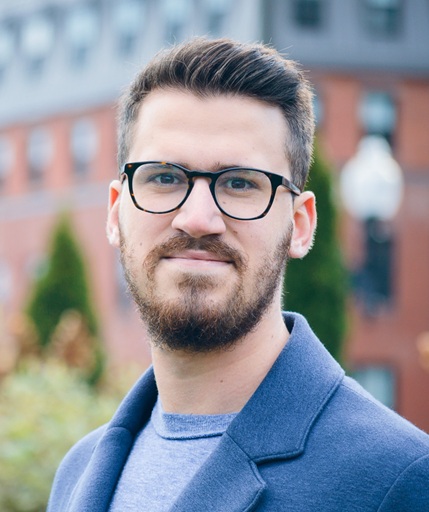
Joel Pollick grew up in Boston with philanthropy as a family business. His father founded The Giving Back Fund, a nonprofit that helps athletes and entertainers launch charitable foundations and donor-advised funds. Yao Ming’s foundation operated through it, as did Britney Spears’ first foundation.
“The joke was that I knew what a donor-advised fund was when I was six years old,” Joel says. “But it’s actually true.”
His family donated 10% of its income annually, rooted partly in the Jewish concept of tzedakah. Growing up in that world exposed him to the operational messiness of charitable giving. Even wealthy, well-intentioned donors struggled to navigate it effectively.
“I had pretty asymmetrical information on how philanthropy worked, and I found it confusing when I wanted to start giving on my own,” Joel says. “That was the moment where I thought: if this feels difficult for me, it’s probably difficult for a lot of people.”
That instinct resonated with us personally. My brother Ryan and I grew up in Minnesota, and giving has been part of how we’ve built our careers. We run the Weber Family Fund, which supports entrepreneurship and innovation across Minnesota as well as schools and community organizations in the region where we grew up. We’ve also taken the Founders Pledge, committing at least 2% of our personal proceeds from Great North Ventures to Minnesota nonprofits. In our prior business, NativeX, we experienced firsthand the friction of managing corporate giving that Percent Pledge solves.
When we met Joel, we weren’t only looking at a market opportunity, but a founder who shared our understanding. Joel grew up immersed in the nonprofit world and experienced a longstanding pain point: corporate giving wasn’t intuitive or easy. After an early career in SaaS sales and strategy consulting, the world Joel grew up in kept pulling him back. Once he started donating regularly, he found the actual process surprisingly difficult. Figuring out which charities to trust took work. It was unclear where donations ended up, and the software felt clunky and unintuitive.
He started thinking there might be a business in fixing it.
“Everyone says they want to give back more than they currently do. But when you dive into what’s preventing them, it’s always the same things — I don’t know where to start, I don’t know who’s doing good work, I have no idea where my money is going,” he says.
Building the company
Percent Pledge wasn’t founded as a B2B enterprise software company. Joel built the first iteration as a side hustle in 2019, using consulting bonuses to hire a designer and a couple of coders. The initial idea was to develop a subscription platform that let individual donors contribute a percentage of their monthly income to vetted nonprofits, organized by cause area. Users would get weekly impact reports showing where the money went.
“When you give, the communication you get from nonprofits is just asking you to give more,” Joel says. “We never asked anyone to give more. We sent them stories about who their money was helping.”
Six months in with the first few hundred users, retention was 100%. But scaling a consumer product meant spending heavily on paid acquisition. Even if he’d spent the capital, selling to companies made more sense. One enterprise customer could bring hundreds of employees onto the platform overnight.
He spent the following year conducting 75 in-depth Jobs To Be Done (JTBD) interviews with business leaders at companies ranging from 100 to 100,000 employees. Corporate giving, they told him, was just as clunky as the individual donor experience. Most mid-sized companies either had no social impact program at all, or were running something ad hoc and manual. Large enterprise platforms like Benevity, YourCause and CyberGrants were built for Fortune 500 companies and priced accordingly.
The company launched its B2B platform in early 2020 and signed its first 10 to 20 customers that year, largely through introductions from the B2C users Joel had cultivated.
“We kept getting bites from larger companies early on, but we just didn’t have enough built yet,” Joel says. “As we kept growing with smaller customers and improving the platform, eventually we started winning them, and then we started winning them consistently.”
A changing market
For years, corporate giving software was the kind of subscription companies bought once and rarely revisited. Contracts renewed automatically and HR teams accepted that only 5% or 10% of workers would actually use the platform.
That mindset is starting to change. Employees expect workplace software to feel intuitive and easy to use; many older CSR platforms no longer meet that standard. As frustration builds, more companies are reevaluating the systems they’ve used for years.
Private equity consolidation slowed product development at the major incumbents, while enterprise buyers kept renewing out of sheer habit rather than satisfaction. They typically also take a large cut, 3–10% of donations processed. Meanwhile, Percent Pledge charges 2.3% on donations. It bundles giving, volunteering, disaster relief and reporting into one system. It deploys in days rather than months and ships new features every couple of weeks.
Price gets a foot in the door, but it isn’t what closes deals.
“Price worked well as a wedge, but it was never the thing to convert,” Joel says. “What converts is showing companies what participation looks like when the software actually works.”
Enterprise customer wins
Large, enterprise employers have switched to Percent Pledge from legacy platforms, in some cases before their existing contracts were up. These clients have typically seen employee participation double or more in their first year on the platform, with some generating more donation activity in their first two months than in the prior ten months on their previous system.
With an easy, intuitive user experience, after switching, companies on average increased employee participation by more than 50%. Percent Pledge has also leaned heavily on hiring subject-matter experts on its customer support team.
“With legacy systems, you get a constant revolving door of account managers — pretty much token tech support,” Joel says. “We intentionally hire domain experts, people with real experience in nonprofit and corporate giving. Our people can be a lot more than just tech support.”
One unusual part of Percent Pledge’s growth is that it happened with very little traditional marketing. Instead of relying on paid advertising or aggressive outbound sales, the company’s most effective top-of-funnel channel has been a program it calls Community Volunteer Events: monthly virtual sessions that require no paid media spend and now attract roughly 450 signups per month from employees at more than 110 companies.
In past sessions, employees have helped humanitarian aid workers map disaster zones, reviewed résumés for high school girls, and sorted through trail cam footage for wildlife scientists tracking endangered species. Most of the company’s new enterprise clients last year attended at least one Community Volunteer Event before a formal sales conversation began.
By the numbers
For new customers, the outcomes are measurable and consistent:
- DRW’s 2025 Giving Challenge raised $1.54 million in just two weeks — more than 2x their goal. 97% of employees who viewed the campaign contributed.
- Edelman Financial Engines switched to Percent Pledge mid-year and saw participation grow more than 50% in under three months. Edelman also exhausted its annual matching gift budget for the first time with Percent Pledge.
- Vimeo grew participation in its global matching gift program 4x in year one after switching to Percent Pledge.
- Progress Software logged more volunteer hours in its first six months with Percent Pledge than in the prior three years combined with Benevity.
Greenfield ahead
Percent Pledge reached profitability last year, an unusual achievement for an early-stage company. Joel attributes it partly to a deliberate decision to stay lean while better-funded competitors burned through capital and folded.
“There were a number of companies that were potential competitors to us, raised a lot more money, and have already gone,” he says. “Staying alive and staying in the fight is like half the battle.” The company runs on a team of 10, fully distributed across the U.S. and Canada.
As Percent Pledge grows, the company can spend more of its capital on expansion instead of sustaining the business. The market itself is relatively concentrated: roughly 1,500 enterprise buyers account for about $1 billion a year in SaaS fees paid to legacy vendors, and most are still contracted with a small group of incumbents.
“We don’t need to win everything to win big,” Joel says. “Let’s say we just took 100 to 150 of these companies off them — that’s maybe 10% of the market. That would get us to a really good outcome.”
Percent Pledge fits into a bigger bet we’ve been making on tools that enhance access to financial services and by extension, economic empowerment. We’ve backed Branch, which delivers earned wage access and fee-free banking directly inside the workforce platforms gig workers already use, and FactoryFix, a labor marketplace connecting manufacturing businesses to skilled industrial professionals who are often invisible to corporate hiring pipelines — part of a broader thesis we’ve written about here. Percent Pledge follows the same logic: for years, the software infrastructure around corporate giving was built for Fortune 500 budgets and priced accordingly. Joel rebuilt it for everyone else.