by Graeme Thickins
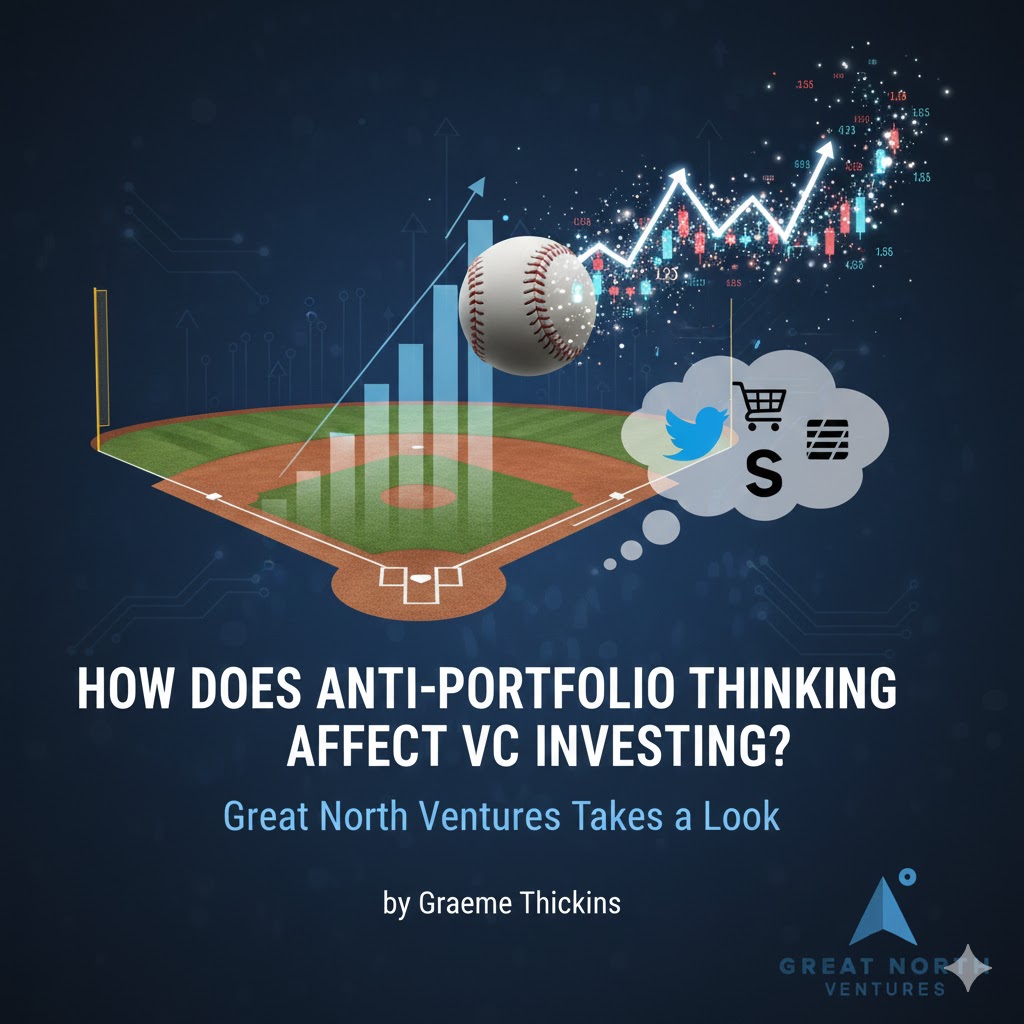
Babe Ruth once famously said, “Never let the fear of striking out keep you from playing the game.” And he struck out a lot – actually leading the American League five times. He also said, “Every strike brings me closer to the next home run.” And we all know how that ended up for him.
VCs track their strikeouts, too. They call these misses their “anti-portfolio” – meaning the startups that could have been in their portfolio had they not passed on investing. The anti-portfolio has become something virtually all successful funds make part of their ongoing investment theses. Many of these firms boldly talk about their big misses, almost touting them as a badge of honor. Why? Because, quite simply, they learn from them.
“We’ve been following this practice of anti-portfolio thinking among VCs for some time,” said Rob Weber, cofounding partner of Great North Ventures. “And we’ve learned much from the lessons this thinking teaches, realizing too how our own misses have helped us pursue winning subsequent investments.“
While investors are often recognized for their big wins in VC, it is frequently under-estimated how lessons learned from big anti-portfolio misses help an investor hone their investment strategy. It’s the combination of wins and misses, and the constant back-testing of investment strategy, that shapes how investors think about the future.
Many of the misses by top VC firms are legendary – on such names as Instacart, Airbnb, Stripe, SpaceX, Facebook, Google, and others. Bessemer Ventures’ David Cowan passed on PayPal’s Series A, citing “Rookie team, regulatory nightmare, and, 4 years later, it’s a $1.5 billion acquisition by eBay.” They also missed Kayak, reasoning that airlines wouldn’t pay high fees for placement on the platform. “Fortunately for Kayak,” they said, “hotels did — as did Priceline when it acquired the company for $1.8 billion.” Danny Rimer of Index Ventures admitted he passed on Airbnb and Facebook because he overweighted on TAM and price, instead of focusing on the best founders. Other famous misses have been reported even after VCs got warm intros from other founders or investors – ignoring the social proof that’s so highly regarded in the VC world.
Later, we’ll look at what big-name VCs learned from misses in one key category of interest for Great North Ventures: fintech.
Timeless Learnings
“Some of the anti-portfolio learnings from past tech cycles can be applied to the current cycle,“ said Ryan Weber, the other Great North cofounding partner and Rob’s twin brother.
The position of VCs is that an anti-portfolio isn’t an embarrassment – it’s an asset, he said. Namely, it’s evidence that a firm is seeing the right founders, playing at the frontier, and stretching its judgement. That is, if you don’t have an anti-portfolio, you aren’t taking enough swings. (Sounds a lot like Babe Ruth’s philosophy, doesn’t it?)
“We’ve had several high-multiple exits over our 20-plus years of investing,” said Ryan. One such win was Field Nation. “Each of these wins has also played a role in helping us continue to learn, all along the way.” Yes, VCs learn from both hits and misses.
What has all their investing experience taught the Weber brothers? “We can spot strong execution earlier than other VCs,” said Rob, citing one key differentiation. “Our new investment themes have actually been honed by all of the deals we’ve done and not done.”
Of course, one must remember how patience is certainly required in early-stage venture investing, as the Weber brothers have written.
After ten successful years as angel investors, the brothers founded Great North Ventures, raising a first fund of $24 million in 2018. Seeing success with that fund, they raised Fund II, which closed at $41 million in mid-2022.
The Ones That Got Away
So, what are some of the Weber brothers’ notable misses in the past – startups they met with early on and decided to pass? (These were during their angel investing years; that is, pre-Great North Ventures.) What did they learn from each of these misses that led them to make investments based on the strategies they developed for their latest fund?
• Sports Engine had a massive exit to NBC Sports/Comcast in 2016. “This big miss of ours has a connection to our Fund II investment in HLRBO, relating to vertical software layering-in payments, insurance, and more to expand revenue,” said Rob Weber. Read more about HLRBO’s recent growth surge here.
• Sezzle became a buy-now, pay later leader, raising more than $550M; it now trades publicly on the Nasdaq. “Missing this big success definitely had an effect on our decision to make a Fund II investment in LendAPI, which is representative of the mega-trend toward embedded financing,” said Rob. Great North recently wrote about that fintech investment here.
• ThirdPartyTrust was a respectable SaaS exit when it was acquired by BitSight in 2022. “We missed this cybersecurity play, but it had a role in our decision to make a Fund II investment in NROC Security, which provides data security for enterprises in the current super-cycle of Generative AI,” said Ryan Weber. Read more about the NROC investment here.
• OpenLoop was a telehealth startup in Iowa that became a unicorn. “We passed because we had a difficult time seeing how they might break out amongst other early-stage startups competing in the telehealth space during the 2020 pandemic-driven telehealth demand surge,” said Ryan Weber. “But we learned from this one that the speed of early iteration, and a strong customer feedback loop, are clear signs of solid execution. OpenLoop adapted its offering to provide a white-label infrastructure solution so that their clients could focus on their specific clinical offerings and patient acquisition, instead of directly competing for patients as a branded, direct-to-consumer telehealth service.”
As mentioned above, Great North is hardly alone in missing out on great investments. Many of the top VCs have talked about how they learned hard lessons from their biggest misses, which helped them going forward.
Lessons Learned By Some of the Biggest VCs From Fintech Misses
Reid Hoffman of Greylock missed Stripe. Union Square Ventures, a16z, and Bain Capital Ventures each missed Square. Bessemer missed Plaid. FF Venture Capital was one fund who admitted missing Robinhood. A student fund at Stanford, Dorm Room Fund, passed on Brex. Unpopular Ventures missed Nubank – later saying they designed the firm’s investment thesis partly around learning from misses like that and others.
These prominent anti-portfolio stories in fintech reveal how so many investors walked past these startups that would become generational companies. In hindsight, the pattern resembles an array of what one might call traps, which made what became world-changing ideas look uninvestable at the time.
One recurring trap was the “crowded market” illusion. Investors saw payments as “solved” when Stripe appeared, or, in the case of Brex, corporate cards as conquered ground because Amex existed. What they missed was implementation pain: Stripe didn’t reinvent payments, it reinvented developer experience; Brex didn’t beat banks on rewards but on instant underwriting and no personal guarantees.
Another trap was dismissing early types of users as unserious or low-value. Square was ignored because food-truck vendors and farmers-market sellers looked too small to matter. Investors failed to see that these users were the entry points for much broader infrastructural plays.
Regulatory fear formed a third barrier. Robinhood’s founders heard repeatedly that building a brokerage was impossible for a startup. Nubank encountered similar skepticism in Brazil’s oligarchic banking landscape. Yet in both cases, surviving regulation became a moat rather than an obstacle.
Some misses came from overlooking the hidden “infrastructure layer.” Plaid began life as an unexciting consumer app and was dismissed even after pivoting to data connectivity. Investors saw screen-scraping hacks; they missed the railroad tracks being laid under the entire fintech ecosystem.
And many investors recoiled at hardware, misreading Square’s card reader as the product instead of the inexpensive doorway into a sticky software relationship.
Across all these stories, one insight stands out: investors who looked through the lens of incumbents missed the opportunity. Those who asked, “Is the incumbent loved?” saw the cracks forming long before the market did. That included top-tier firms like Sequoia, a16z, and Founders Fund, who were each big beneficiaries from their respective fintech investments. The incumbent “moat” was often just an illusion waiting to be broken.
The Road Ahead
With such instructive lessons such as these, plus the learnings from their own extensive experience with wins and misses, the partners of Great North Ventures continue to move forward confidently with the investment theses they developed for their Fund II. “We believe,” said Rob Weber, “that, along with our ‘Vertical AI’ focus, startups incorporating ‘Embedded Finance’ into their offerings provide some of the best opportunities to win in the world of early-stage investing over the next decade.” Read more about Great North’s investment theses here.
———-
Graeme Thickins is a startup advisor and an investor in Great North Ventures Fund I. He is also an angel investor in two subsequent Great North portfolio companies. He has written previously for and about Great North Ventures and its founders over several years.